blog
8 Fitness Tests Before You Learn to Snowboard: Are You Ready?
Before your first lesson, Choiee runs 8 short fitness tests, adapted from international assessment standards, to see where you are strong and what to train before you step onto the simulator.
01 — Context
Technique Needs a Ready Body
Most beginners who fall a lot, tire quickly or end up with sore knees are not short on technique. Their body simply isn't ready yet. A short test session tells your instructor where to start with you.
02 — Content
8 Fitness Tests Before You Learn to Snowboard: Are You Ready?
Snowboarding looks effortless, but it demands strong legs, good balance and mobile knees and ankles. Most beginners who fall a lot, tire quickly or get sore knees are not short on technique. Their body simply isn't ready yet.
That's why, before the first lesson, Choiee asks every student to complete 8 short fitness tests. They take about 20–30 minutes, need no complicated equipment, and show your instructor where you are strong and what to work on before you step onto the slope simulator.
This isn't an exam that rules anyone out. The results only help Choiee plan supplementary training that fits you.
Why Test Your Fitness Before Learning to Snowboard?
- Balance decides whether you stay on the board or keep falling.
- Leg strength lets you hold a bent-knee stance for a whole run without fatigue.
- Ankle mobility lets you shift your weight forward and avoid sitting back (backseat), a common cause of falls and knee injuries.
- Core strength keeps your upper body stable as you change edges and turn.
Choiee's 8 Tests
1. Single-leg balance, eyes closed
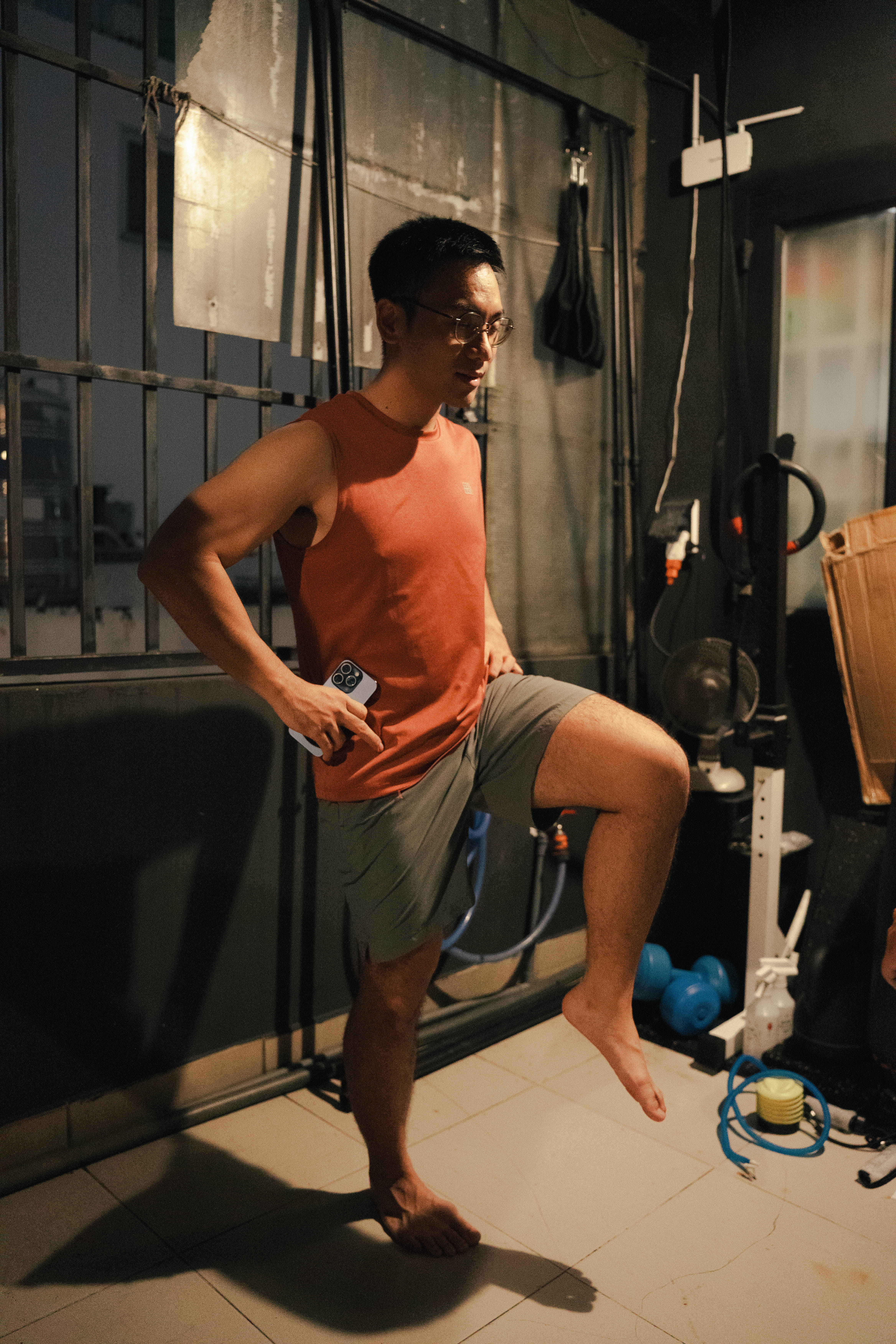
- What it measures: balance without visual help, and your sense of body position.
- How to do it: stand on one leg, hands on hips, eyes closed. Time it until the other foot touches the floor or you open your eyes. Test both legs.
- Pass mark: ≥ 15 seconds per leg (close to the average for adults aged 18–39 with eyes closed).
- Why it matters on snow: on the mountain you often can't see the slope clearly (fog, flat light). Good balance lets you feel the board through your feet instead of your eyes.
2. Knee-to-wall ankle test (10 cm)
- What it measures: ankle mobility as the knee travels forward.
- How to do it: place your toes 10 cm from a wall, keep your heel down and push your knee forward to touch the wall. Test both ankles.
- Pass mark: knee touches the wall without the heel lifting.
- Why it matters on snow: snowboard boots hold your ankle flexed forward. Stiff ankles push you back and make the board harder to control.
3. Single-leg squat to 60°
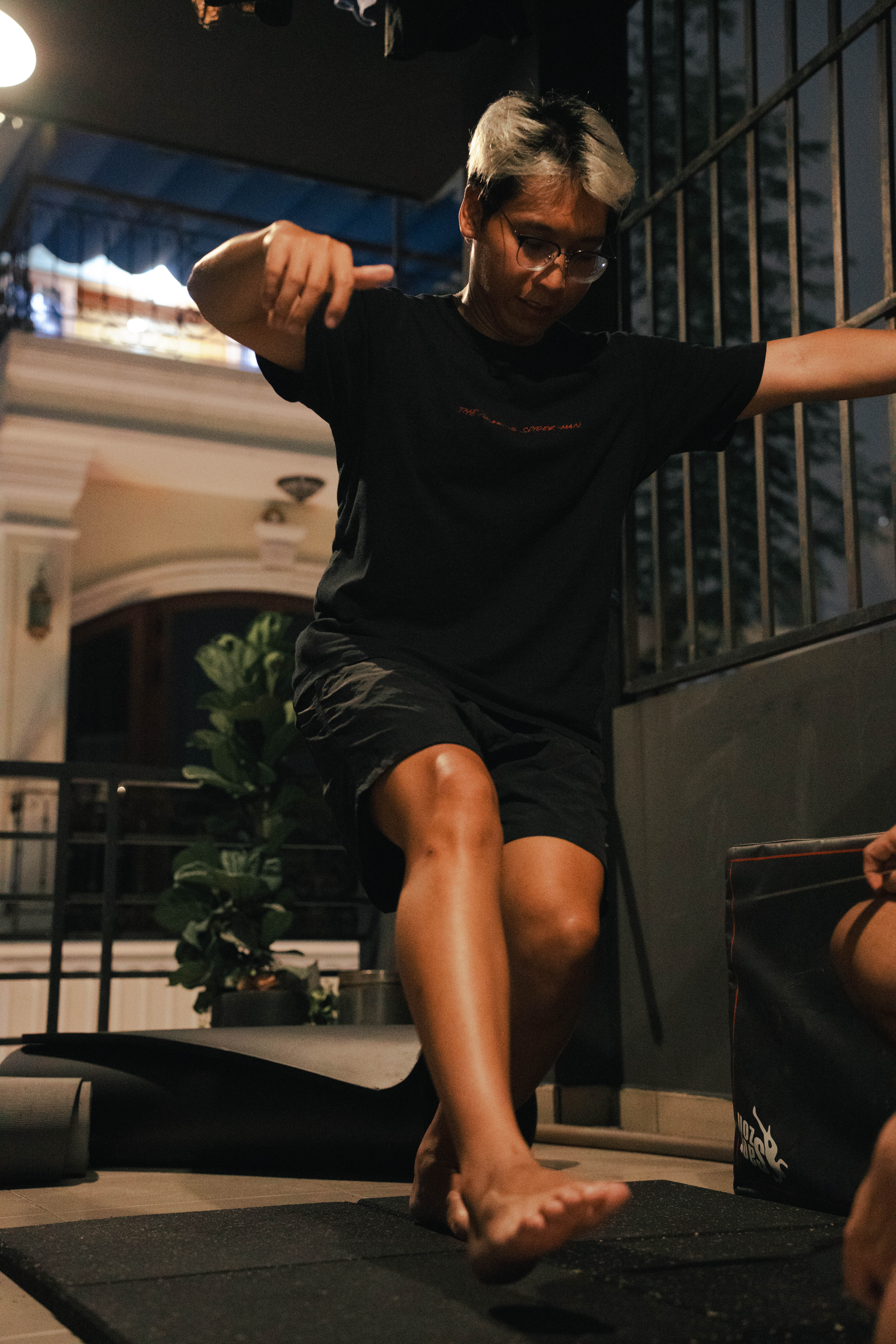
- What it measures: leg strength and knee control on one leg.
- How to do it: stand on one leg, lower until the knee bends about 60 degrees, then stand back up. At least 5 reps per leg.
- Pass mark: 5 reps with the knee not collapsing inward, no big wobble, and both legs roughly equal.
- Why it matters on snow: when you turn, most of the load goes through one leg. A weak leg or a knee that caves in is a sign to train more before riding.
4. Single-leg hop
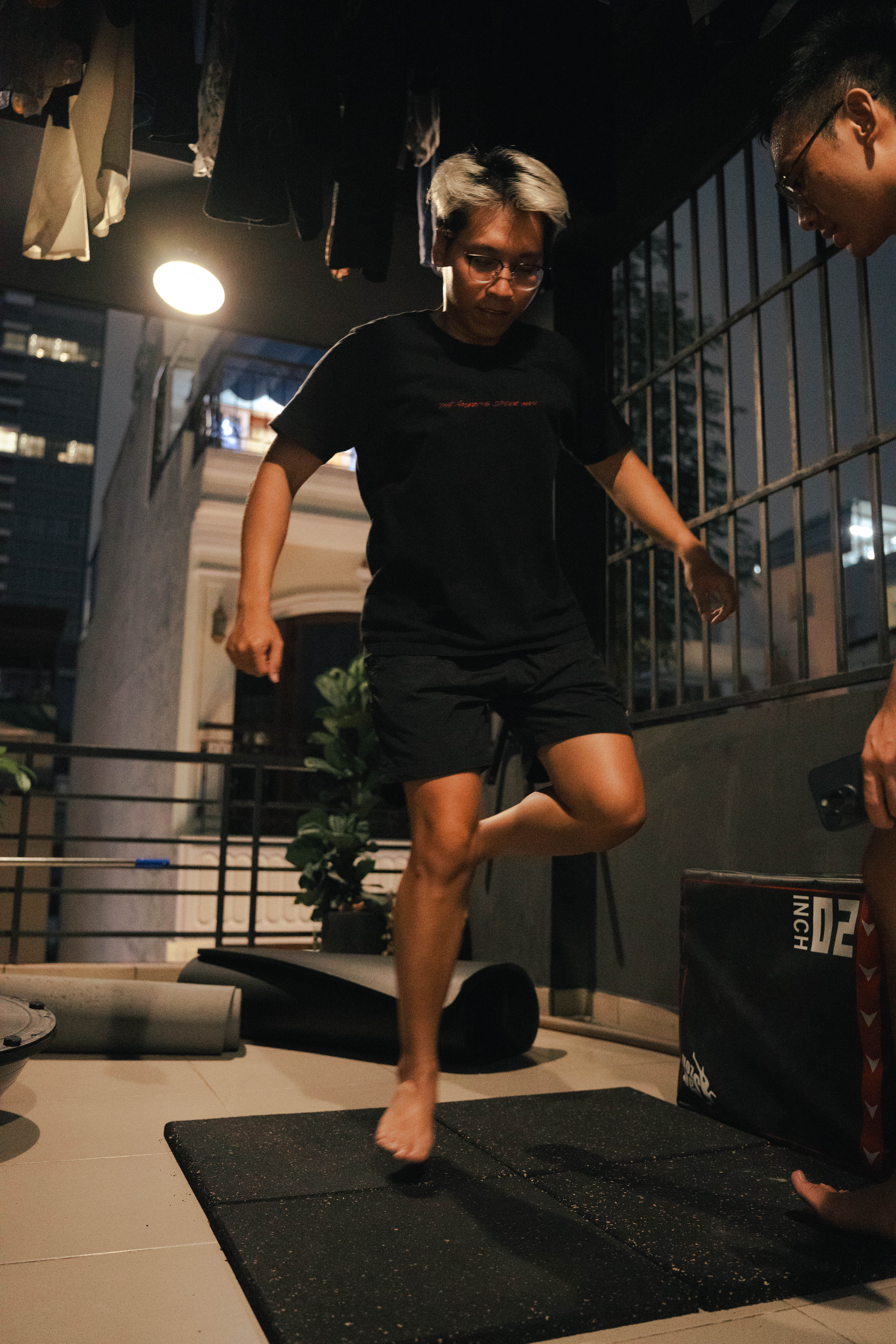
- What it measures: power and stable landing on one leg.
- How to do it: hop forward on one leg and land on the same leg, hold still for 2 seconds, repeat 10 times. Test both legs.
- Pass mark: soft, steady landings with the knee tracking over the toes.
- Why it matters on snow: helps you absorb bumps, switch edges quickly and stay balanced when the board gets bounced around.
5. Wall sit
- What it measures: endurance of the front thigh muscles.
- How to do it: back against a wall, slide down until your thighs are parallel to the floor with knees at 90 degrees. Time the hold.
- Pass mark: ≥ 60 seconds.
- Why it matters on snow: you hold a bent-knee stance almost all day. Tired thighs make your technique fall apart quickly and lead to late-day falls.
6. Side plank
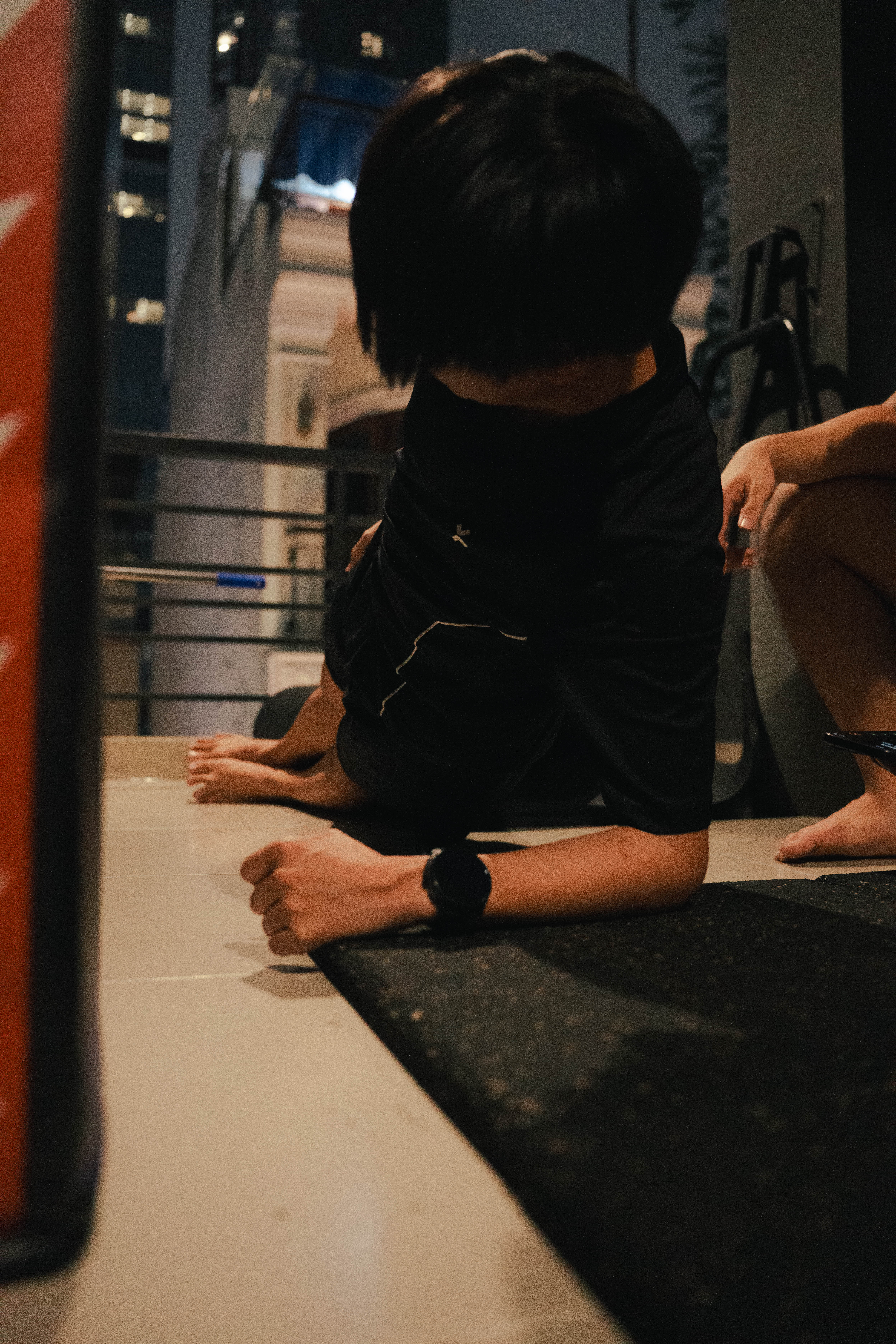
- What it measures: endurance of the core and side hip muscles.
- How to do it: lie on your side, prop up on your forearm and lift your hips into a straight line. Time each side.
- Pass mark: ≥ 30 seconds per side without the hips sagging.
- Why it matters on snow: your core keeps the upper body quiet while your legs rotate and change edges, separating upper and lower body.
7. Drop from a 30 cm box, watching the knees
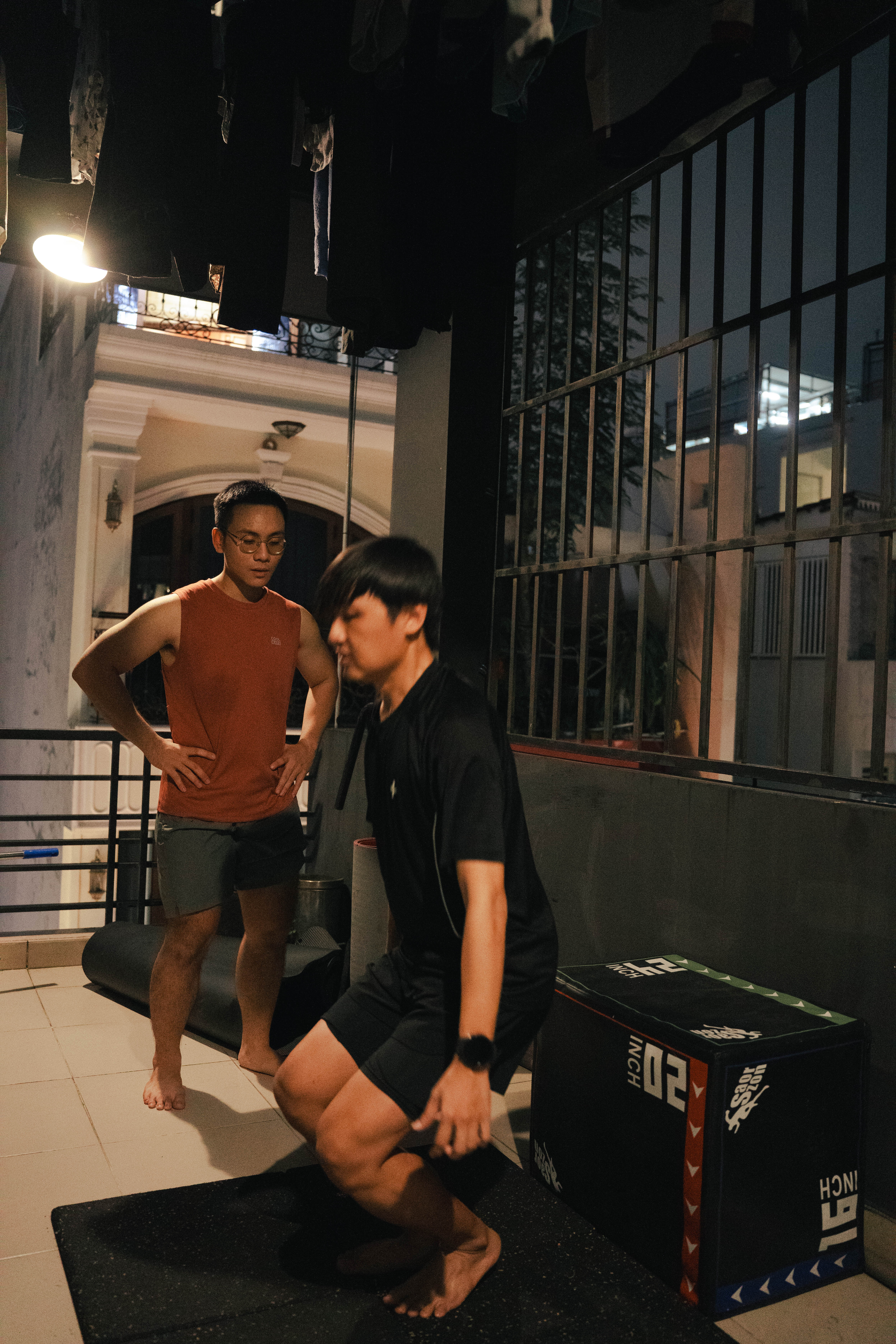
- What it measures: how you land under load, especially whether your knees collapse inward (valgus).
- How to do it: stand on a 30 cm box, step off and land on both feet. The instructor watches (or films) your knee angle on landing. People with a sports background can do an advanced version from a 50 cm box.
- Pass mark: both knees track over the toes, with a soft, even landing.
- Why it matters on snow: knees caving in under load is a position linked to knee ligament injuries. Spotting it early means you can fix it before you hit the slope.
8. Bosu squat
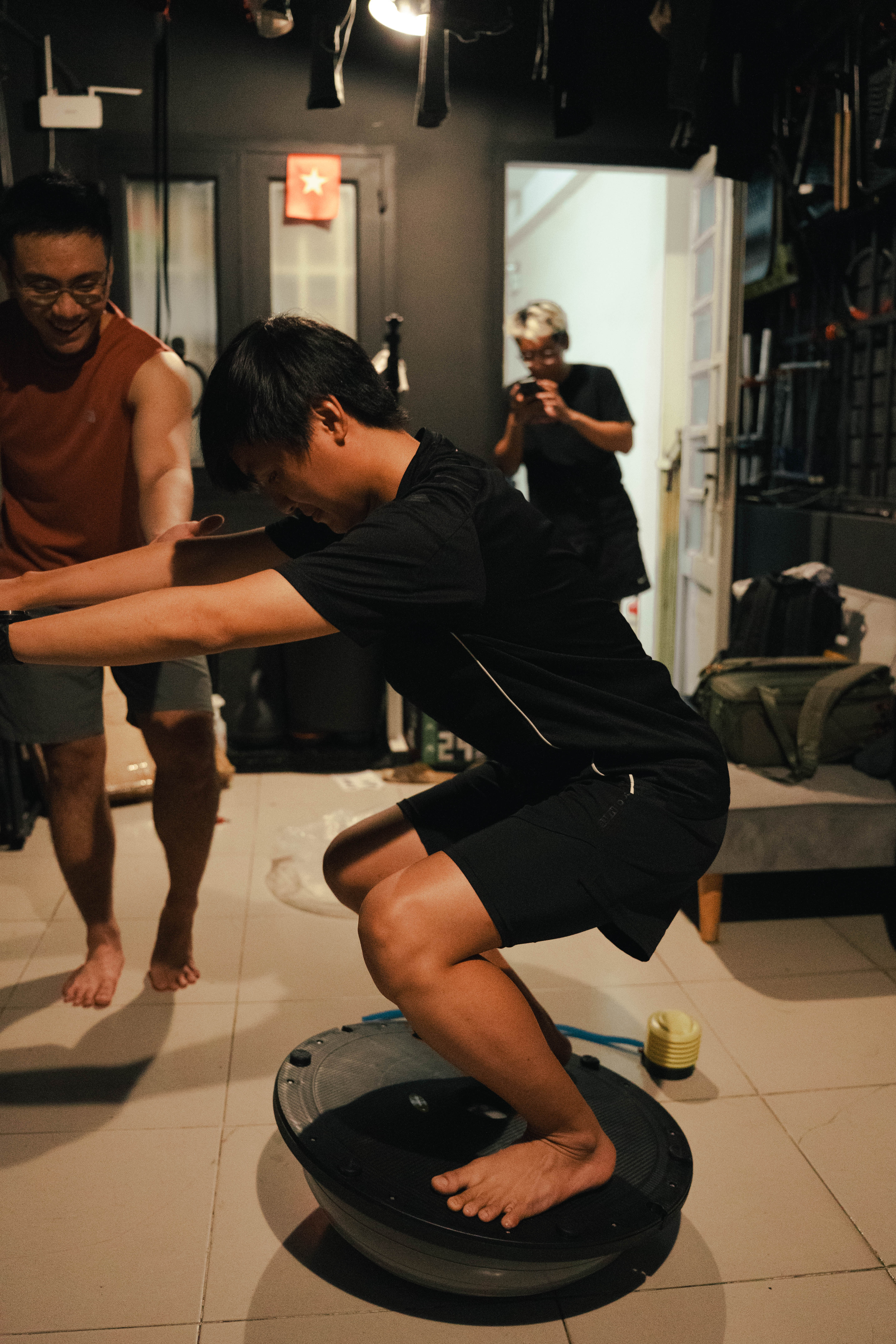
- What it measures: leg strength on an unstable surface, the closest thing to standing on a board.
- How to do it: flip the Bosu over (dome side down), stand with both feet on the flat side and squat slowly 10 times without touching down with your hands. An instructor should stand close by.
- Pass mark: 10 reps without stepping off, with stable knees and torso.
- Why it matters on snow: this test combines balance, strength and knee control. Staying steady on the Bosu is a good sign you are ready for the slope simulator.
The 8 Tests at a Glance
| # | Test | What it measures | Pass mark |
|---|---|---|---|
| 1 | Single-leg balance, eyes closed | Balance | ≥ 15 s / leg |
| 2 | Knee-to-wall, 10 cm | Ankle mobility | Knee touches wall, heel down |
| 3 | Single-leg squat to 60° | Leg strength | ≥ 5 reps / leg |
| 4 | Single-leg hop | Power, landing | 2 s hold × 10 reps / leg |
| 5 | Wall sit | Thigh endurance | ≥ 60 s |
| 6 | Side plank | Core, hips | ≥ 30 s / side |
| 7 | Drop from a 30 cm box | Landing, knee control | Knees track over toes |
| 8 | Bosu squat (flat side) | Balance + strength | 10 reps, no hands |
Which Standards Are These Tests Based On?
Choiee didn't invent these tests. Most are shortened versions of standard assessments used by sports organisations, ski and snowboard federations and physiotherapists internationally. Choiee keeps the core of each test (what it measures and which errors to look for), then shortens it and reduces the equipment so beginners can complete all of them in one 20–30 minute session.
| # | Choiee test | Original assessment | Source | How Choiee adapts it |
|---|---|---|---|---|
| 1 | Single-leg balance, eyes closed | Unipedal Stance Test | Springer et al. (2007), Journal of Geriatric Physical Therapy | One attempt per leg instead of best of three; 15 s is close to the 18–39 average |
| 2 | Knee-to-wall, 10 cm | Knee-to-Wall / Weight-Bearing Lunge Test | Laboratory Manual for Exercise Physiology (Human Kinetics) | Pass / fail at the 10 cm mark only |
| 3 | Single-leg squat to 60° | Strict Tempo Single Leg Squat (SkillsQuest battery) | U.S. Ski & Snowboard | No 75 cm box or metronome; ~60° knee bend, 5 reps / leg |
| 4 | Single-leg hop | Single-Leg Hop Test | Sports physiotherapy; limb symmetry within 10% (Munro & Herrington) | One hop type, scored on landing quality |
| 5 | Wall sit | Wall Sit Test | A common field test | One pass mark for everyone, not split by age or sex |
| 6 | Side plank | Side Bridge Endurance Test (McGill Torso Endurance battery) | Stuart McGill; ACE materials | Side bridge only, still comparing left and right |
| 7 | Drop from a 30 cm box | Drop Jump / Landing Error Scoring System (LESS) | Padua et al. (2009), JUMP-ACL | Same 30 cm box; checks only for knees caving in instead of all 17 items |
| 8 | Bosu squat | Choiee-specific test | Unstable-surface balance training principles | Simulates the feel of standing on a board |
Because these are shortened versions for beginners, Choiee uses the results to plan supplementary training. They are not official scores from the organisations above, and they don't replace an assessment by a doctor or physiotherapist.
What If I Fail a Test?
That's completely normal. Many beginners don't pass the wall sit or the Bosu squat on their first try. When a test isn't passed, your instructor will:
- Give you supplementary exercises for that area (for example, thigh endurance or single-leg balance work).
- Track your progress over the following sessions.
- Retest before moving on to more demanding work on the slope simulator.
Testing Yourself at Home
You can try tests 1, 2, 5 and 6 at home with just a wall and a stopwatch. Note your results and bring them to your first lesson. The jumping tests (4, 7) and the Bosu test (8) are best done with an instructor watching.
Safety Note
These tests assess training readiness and are not a medical diagnosis. If you have an injury, joint pain, a heart condition or recent surgery, check with a doctor or physiotherapist before trying them. Stop immediately if anything hurts.
Get Started With Choiee
Want to know where you stand? Book your fitness assessment and first lesson at Choiee, or see our pricing.
Read More
References
- Springer BA et al. (2007). Normative Values for the Unipedal Stance Test with Eyes Open and Closed. Journal of Geriatric Physical Therapy
- Haff GG & Dumke C. Laboratory Manual for Exercise Physiology, Human Kinetics: Ankle flexibility test
- U.S. Ski & Snowboard: SkillsQuest Fitness Manual 2020
- Single-Leg Hop Test: ACL Return-to-Sport Testing Protocol
- ACE: McGill's Torso Muscular Endurance Test Battery
- Padua DA et al. (2009), Landing Error Scoring System: summary on Science for Sport
How long does the pre-snowboarding fitness test take?
About 20–30 minutes for all 8 tests, usually done in your first session at Choiee.
Can I still take lessons if I fail a test?
Yes. The results are only used to plan the right supplementary training, never to turn students away.
Can I test myself at home?
Yes, for tests 1, 2, 5 and 6. The jumping tests and the Bosu test should be done with an instructor watching for safety.
03 — Summary
In Short
Choiee's 8 tests check balance, ankle mobility, leg strength and endurance, core and landing control. Failing one is normal: the results are only used to plan the right supplementary training for you. To find out where you stand, book your assessment and first lesson.